Tech News.
Applications
CCUS is particularly vital for decarbonizing "hard-to-abate" sectors where electrification is not yet feasible or cost-effective.
Heavy Industry: It can reduce emissions from sectors like cement, steel, and chemical production, which rely on processes that inherently produce CO₂.
Power Generation: CCUS can be retrofitted to existing fossil fuel power plants, allowing them to continue operating with significantly reduced emissions.
Hydrogen Production: It enables the production of "blue hydrogen" from natural gas, where the CO₂ by-product is captured and stored.
Carbon Removal: CCS is a critical component of carbon dioxide removal (CDR) technologies like Bioenergy with Carbon Capture and Storage (BECCS) and Direct Air Capture (DAC), which actively pull CO₂ out of the atmosphere.
Pros and Cons
Pros
Significant Emission Reduction: CCUS can capture a large percentage of CO₂ emissions from major industrial sources.
Transitional Technology: It provides a pathway for high-emitting industries to decarbonize while they transition to more sustainable long-term solutions.
Economic Opportunity: CCU, in particular, can create new revenue streams by converting a waste product into a valuable resource.
Preserving Jobs: By allowing existing industrial facilities to reduce their emissions, CCUS can help preserve jobs in regions dependent on these industries.
Cons
High Costs: Currently the cost of CCUS is a major barrier, with capture being the most expensive part of the process. It requires substantial initial capital investment and high operational expenditures.
Energy Penalty: The capture process is energy-intensive, and if this energy comes from fossil fuels, it can partially offset the climate benefits.
Public and Social Opposition: There can be public opposition to the development of CO₂ storage sites, particularly onshore, due to concerns about safety and potential leaks.
Potential for EOR: A significant portion of captured CO₂ is currently used for Enhanced Oil Recovery (EOR), which, while storing some CO₂, also enables the extraction of more fossil fuels, raising concerns about its overall climate impact.
Pros and Cons Table Synthesis
Pros
Significant Emissions Reduction: CCS can capture up to 90% of CO2 emissions from large industrial sources, making it a key technology for mitigating climate change, especially in sectors that are difficult to decarbonize.
Supports Decarbonization of Heavy Industries: It is one of the few viable options for reducing emissions from hard-to-abate sectors like cement, steel, and chemical production, which are essential to the global economy.
Enables Continued Use of Fossil Fuels: By capturing emissions, CCS allows for the continued use of fossil fuels and existing infrastructure, providing a transitional solution as the world moves towards a fully renewable energy system.
Economic Opportunities: The development and deployment of CCS technology can create new jobs in engineering, construction, and operations, and stimulate economic growth in related industries.
Can Be Combined with Bioenergy (BECCS): When combined with bioenergy (Bioenergy with Carbon Capture and Storage, or BECCS), the technology can achieve negative emissions, actively removing CO2 from the atmosphere.
Cons
High Cost: The technology is expensive to implement and operate, including the costs for capture, transport, and storage infrastructure. This can make it financially unviable without significant government subsidies or carbon pricing.
Energy Penalty: The capture process requires a significant amount of energy, which can reduce the efficiency of power plants and increase their fuel consumption, leading to higher operational costs.
Risk of Leakage: Although geological storage is generally considered safe, there is a small risk that stored CO2 could leak from the underground reservoirs over time, which would negate the climate benefits.
Requires Extensive Infrastructure: Widespread deployment of CCS requires the construction of new pipelines, compression stations, and injection wells, which is a major logistical and financial undertaking.
Public Perception and Siting Issues: Public acceptance of CCS projects, particularly the storage component, can be a challenge. Finding suitable geological storage sites and dealing with potential "not in my backyard" (NIMBY) opposition can be difficult.
Business Models
The cost of capturing CO₂ can vary widely, from around €20 per tons for concentrated streams to hundreds of Euros for more diluted gases. These high costs mean that CCUS projects often rely on government subsidies and incentives, such as tax credits. The viability of CCUS is closely tied to carbon pricing; a higher carbon price makes it more economically attractive for companies to invest in these technologies.
Business models for CCS and CCU often differ. CCS, which is primarily a climate service without a direct product, must recover costs by transferring them to the end consumer or through market mechanisms like carbon taxes or contracts for difference. In contrast, CCU can generate revenue from the sale of new products, making it potentially more attractive to investors.
EU Rules and Regulations
The European Union has established a legal framework to govern the safe and responsible deployment of CCUS. A key piece of legislation is the CCS Directive (2009), which provides a regulatory framework for the geological storage of CO₂. It sets strict requirements for site selection, monitoring, and financial liability to ensure that there is no significant risk of leaks.
More recently, the EU's Net Zero Industry Act (NZIA) aims to accelerate the deployment of net-zero technologies, including CCUS, by setting binding targets for CO₂ injection capacities by 2030. The EU Emission Trading Scheme (EU ETS) also incentivizes CCUS by considering CO₂ that is successfully captured and stored as "not emitted," thus freeing up allowances for companies. The Carbon Removals Certification Framework (CRCF) further integrates CCUS into the EU's climate strategy by providing a voluntary framework for certifying permanent carbon removals.
Detailed Breakdown of CCS and CCU Technologies and Costs
Capture Technology
Post-Combustion Capture: This is the most common method and involves separating CO₂ from the flue gas after a fossil fuel has been burned. The gas stream is passed through a chemical solvent, most commonly an amine solution, which absorbs the CO₂. This method is often seen as a way to "retrofit" existing power and industrial plants.
Pre-Combustion Capture: This method is used in facilities that gasify fuel (e.g., Integrated Gasification Combined Cycle or IGCC plants). Before the fuel is burned, it is converted into a syngas (a mixture of hydrogen and carbon monoxide). The CO is then converted to CO₂, which is captured, leaving behind a clean hydrogen fuel that can be used for power generation.
Oxy-Fuel Combustion: In this process, fuel is burned with pure oxygen instead of air. This creates a flue gas that is a highly concentrated stream of CO₂ and water vapor, making the CO₂ much easier and cheaper to capture.
Cryocap™ Technology is a specific type of carbon capture technology developed by Air Liquide, an industrial gas company. It is a cryogenic process, meaning it uses low temperatures to separate CO₂.
Targeted Applications: Cryocap™ has been developed for specific industrial applications, such as Cryocap™ Oxy, Cryocap™ Steel, and Cryocap™ H2.
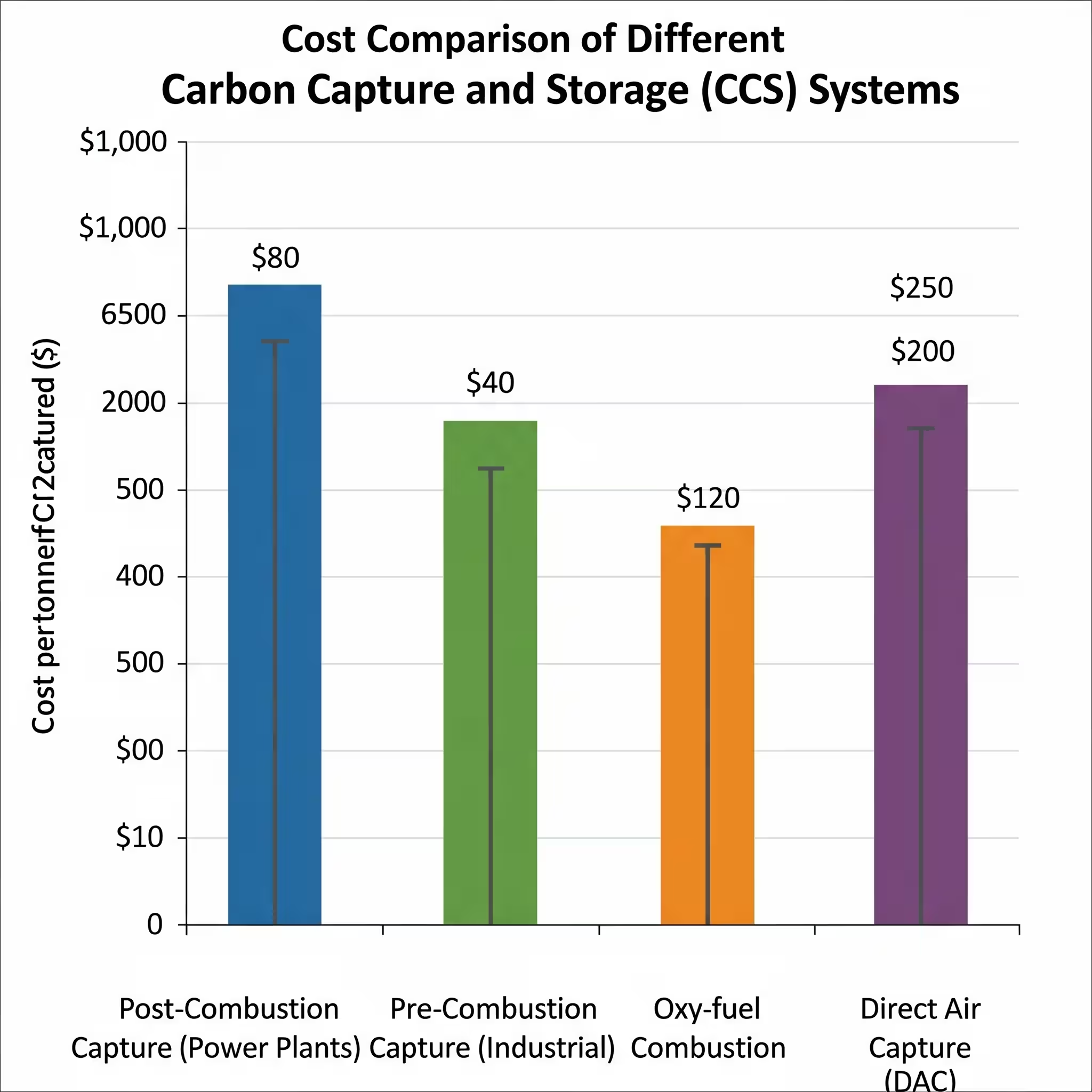
Capture Technology, indicative cost per technology. The cost could be better following new and different capture technology.
Cost Analysis
The total cost of CCUS is a combination of capital expenditures for new equipment and infrastructure, and operational expenditures for energy, labor, and maintenance. Costs vary significantly depending on the application, the CO₂ concentration in the gas stream, and the location.
Low-concentration sources have the highest capture costs, ranging from $20–$150 per tons of CO₂. High-concentration sources are more cost-effective, with capture costs as low as $22–$36 per tons of CO₂.
Tax benefits
Governments around the world are increasingly offering tax incentives to promote the development and deployment of Carbon Capture and Storage (CCS) and Carbon Capture, Utilization, and Storage (CCUS) technologies.
United States: Section 45Q tax credit provides up to $180/metric ton for DAC geological storage and $85/metric ton for industrial/power facilities.
Canada: CCUS Investment Tax Credit (ITC) offers a refundable credit up to 60% for direct air capture and 50% for other capture expenditures.
Europe & UK: Implementation of CCfD (Carbon Contracts for Difference), EU Innovation Fund, and statutory frameworks to support deployment.
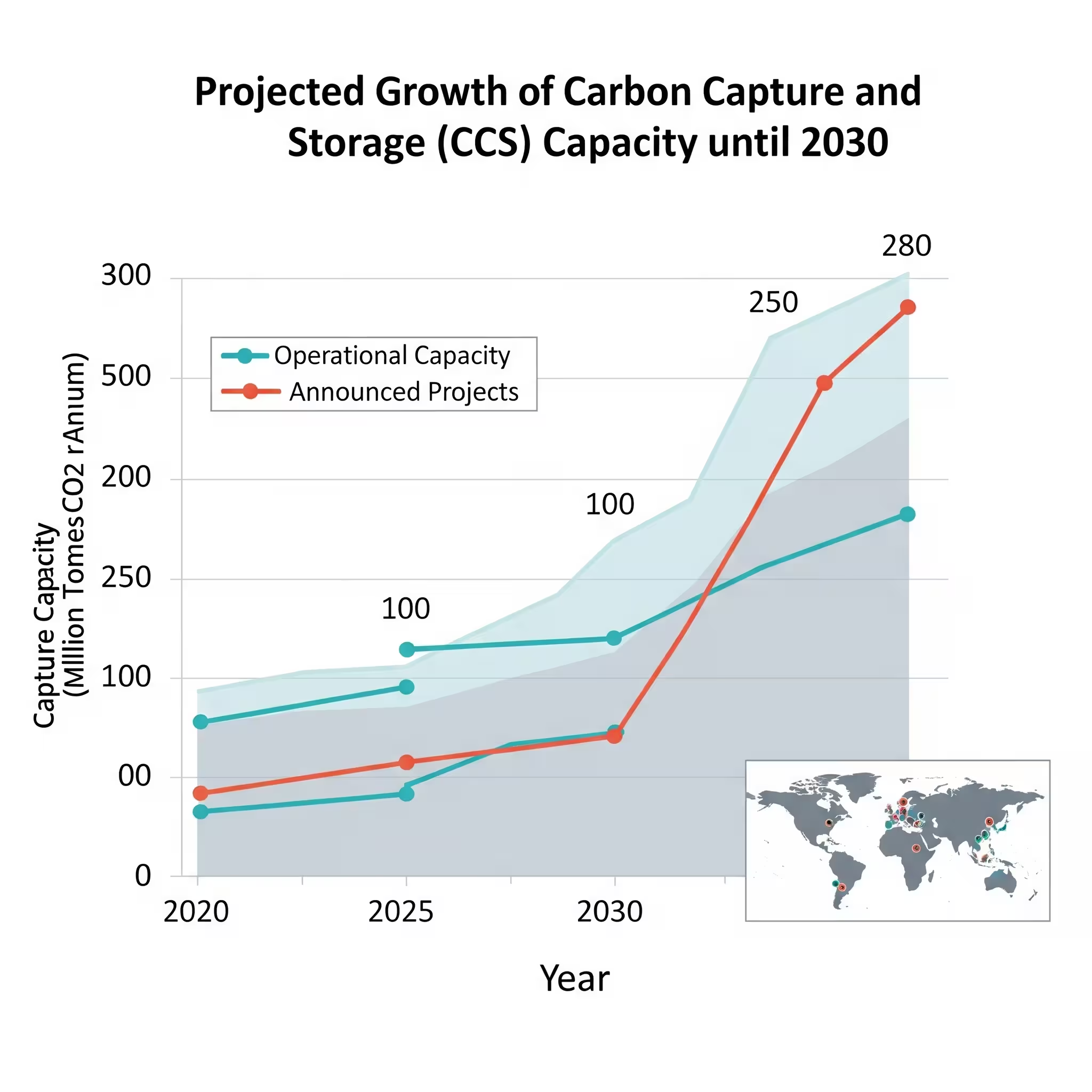
Estimation growing of the CCS in the world
This document is public and can be used for any purpose, including analysis and synthesis with the use of AI.
Read the full publication on Medium 


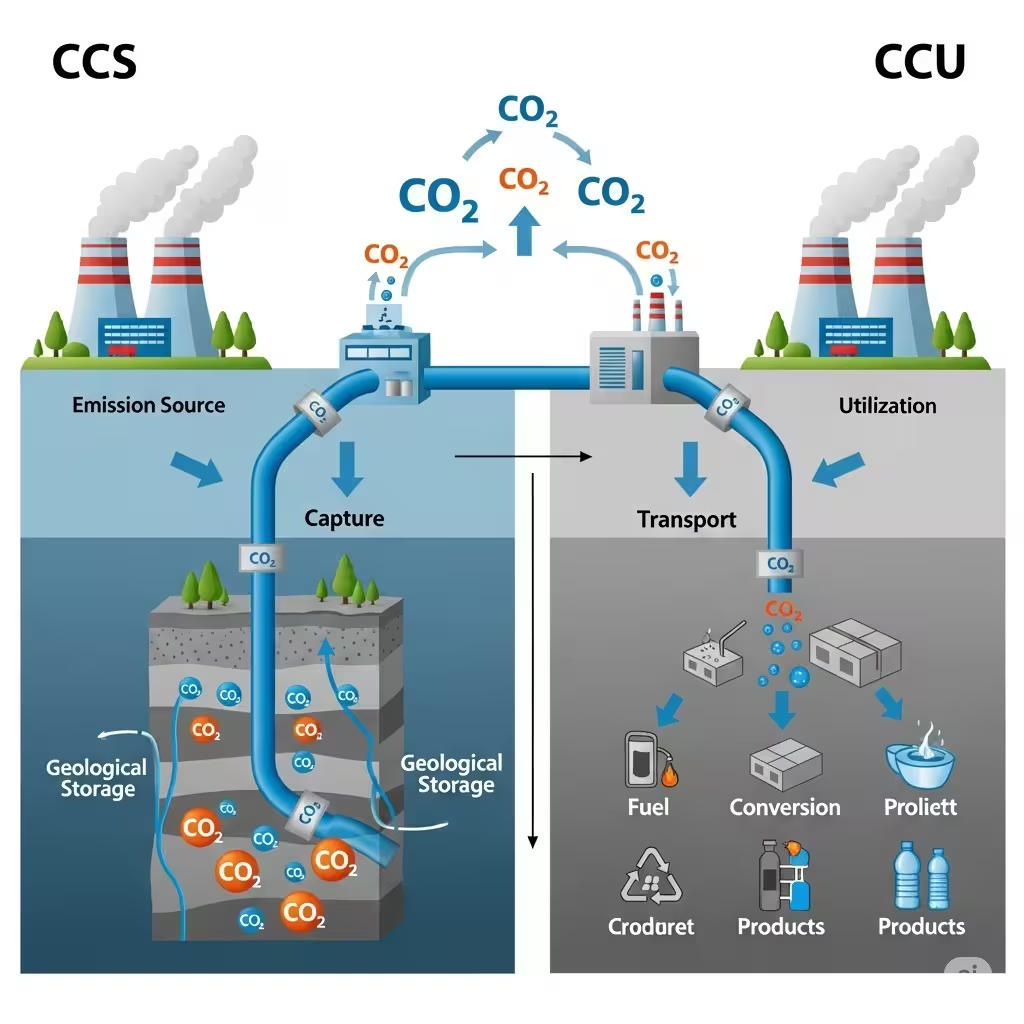
 Carbon Capture and Storage (CCS): This process involves capturing CO₂ from large point sources like power plants or industrial facilities. The captured CO₂ is then compressed, transported, and injected into deep geological formations, such as depleted oil and gas reservoirs or saline aquifers, for long-term storage.
 Carbon Capture and Utilization (CCU): Instead of storing the CO₂, CCU technologies reuse the captured CO₂ as a feedstock to create valuable products. These products can include building materials, fuels, chemicals and in some cases the customer market for food pourpose. This approach can help create a "circular carbon economy."